- 6
ARTWORKS
- ADDRESS
...
Copied!
- Overview
- Artworks
CURATORIAL STATEMENT
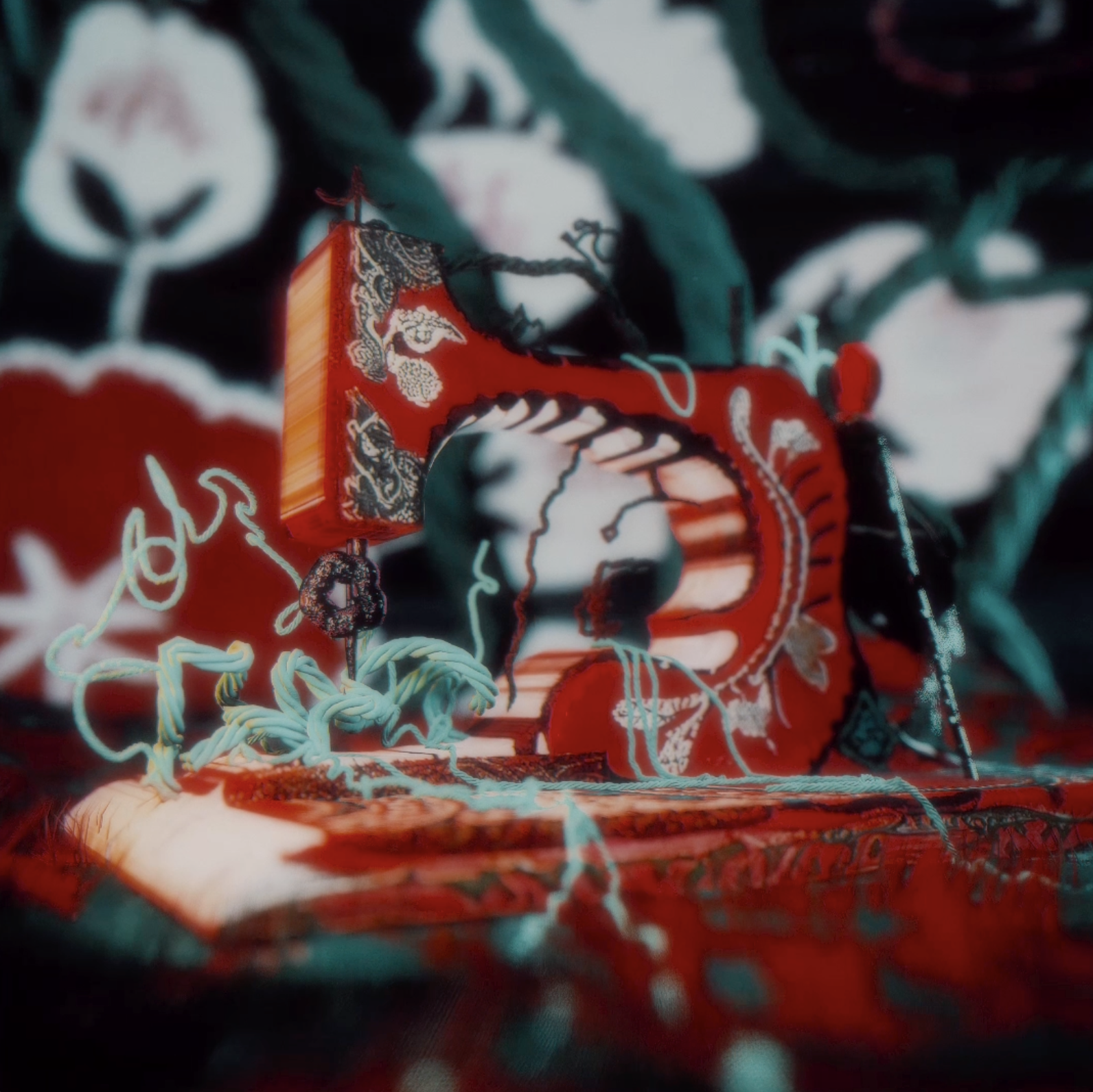
- In the new series, Aziza Kadyri explores the material environment of the 9 Moons universe. First exhibited in Berlin in 2022, the project is an artistic and documentary study on female narratives within Aziza’s family, utilising traditional Uzbek embroidery aesthetics and extended reality technologies as methods. With her latest pieces, Aziza invites the audience to delve into the virtuality and materiality of familial female memories. Aziza constructs new digital objects, drawing on her rigorous research and further developing her findings using artificial intelligence. She trained her own AI generator using images of traditional Suzani embroidery, crafting symbolic objects of imaginary memories. The creative process started with 2D images, produced by the AI generator based on Aziza’s requests. Then, Aziza transformed them into 3D. In this sense, Aziza's collaboration with AI once again raises important questions about collective memory and its material and sensory dimensions. How has the process of constructing collective memory changed with the development of AI technologies? Do we still remember anything, or is there something else that remembers instead of us? These new artworks draw upon objects that can be described as iconic in a sociological sense. For example — the cotton boll. With many generations in Uzbekistan being involved in cotton production, these bolls have become significant beyond their agricultural meaning. They are remnants of the Soviet agro-industrial colonial project, which has had and continues to have enormous societal and ecological impacts on the lives of people in the region. Aziza’s dark and ominous vision of this object resembles a mushroom cloud or a cancerous growth that challenges the nature of this particular colonial project.
ROYALTIES
ETHERSCANContract